
A Guide to Tasting Tea
There are no hard and fast rules about how to enjoy tea, but we provide some guidelines for ensuring that you always enjoy the most fresh, authentic and flavorful cup or pot of tea. An ancient ritual, the preparation and drinking of tea has been refined over time, and tea masters have determined parameters for kind of brewing equipments, water temperature, steeping times and the quality of water. However, the most important component of the tea drinking experince is that you enjoy yourself and the process.

How to Taste Tea
Tea tasting opens the door to our senses. With hundreds of tea varieties, discovering your favorites will take you on a journey where the complexities of flavor, aroma and color seem endless. The more tea you taste, the more you will learn to appreciate the nuances between tea types.
Getting Started
- A good way to start tea tasting is to line up your favorite teas in different categories and start comparing
- As you begin your tasting adventure, note how the flavors may differ depending upon origin, style of tea and steeping time
- Like wine, differences in taste can be attributed to location, climate and how the tea is processed
- Try focusing first on the basic differences between black, oolong, green and white teas
- As you become more familiar, challenge yourself by tasting more similar teas
- Soon you will come to understand what key elements you desire in a tea
- Remember to always have fun and that tasting remains subjective
A Tasting Guide – The Elements of Leaf, Aroma, Liquor and Flavor
Traditional tea tasting focuses on the appearance of the leaf, the aroma both before and after steeping, the color of the resulting infusion or liquor and the tea’s taste or flavor
- Leaf: Examining the leaf is telling. Is it twisted, rolled or a natural, flat leaf? This and whether it’s broken or whole will affect the taste and body
- Aroma: Smell the leaves before steeping. Do they smell grassy, smoky or sweet? Once infused, inhale the aroma deeply and enjoy the bouquet. Does the smell appeal to you and whet your taste buds for sipping? Is it citrusy, flowery, toasty or fruity? A tea’s nose can reveal not only quality but subtle flavors that the mouth might overlook
- Liquor: The color of infused tea or liquor can vary in color. Look at the consistency of its color, and appearance of the liquid in a white cup. Depth of color will denote proper brewing time
- Taste: After slightly cooling, slurp your tea to make sure the full flavor spreads out all over your tongue. Does the tea make a strong impression? Assess whether it has a full, medium or light or round body. Is it smooth? Does the flavor leave a lasting and memorable finish or dissipate after swallowing? Note elements of its flavor traits – is it malty or vegetal? How the tea feels in your mouth is important too. High quality tea exhibits briskness. Instead of flat tasting, briskness refers to the astringent or dry tasting affect tea has on tongue. This astringency is an important aspect to tea, giving it a refreshing feeling
Tasting Terms
An entire language exists for describing a tea’s characteristics. Of course, part of the fun of tasting and becoming more familiar with tea is developing your own language to describe the aroma, flavor and physical characteristics of both the dry and infused tea leaves. If you want to talk like a tea conneuseur though, we list below some of the more commonly used terms:
- Astringency: A lively and mouth drying affect on the tongue. Not bitter, but a clean and refreshing quality
- Balance: Various characteristics of the tea, including body, flavor and finish all come together to perfect the cup
- Biscuity: A freshly-baked bread smell present in some black tea like Assam
- Body: The tactile aspect of tea’s weight and feeling in the mouth. Teas range from full to light bodied
- Bright: A bright liquor color or a lively, clear flavor
- Brisk: The mouth-puckering and lively bite found in high quality tea versus dullness
- Character: A tea’s signature attributes depending upon origin whether its country or region
- Citrusy: A citrus fruit flavor like an orange or lemon
- Complex: A tea with depth and subtle flavor or aroma combinations
- Finish: The lasting taste on your tongue after swallowing the tea
- Fruity: A flavor characteristic of fruit, whether it be apple, peaches or Muscat
- Flat: Dull tea lacking freshness
- Flowery: A floral nose or flavor associated with high grade teas
- Malty: A sweet, malt flavor
- Muscat: Often used to describe high quality Darjeelings – the aromas and flavors of the Muscat grape
- Pungent: Astringent with balanced elements of briskness, brightness and strength
- Self-drinking: Refers to tea with complex flavor profile that does not need additional flavoring such as milk or sugar
- Smooth: Round bodied, fine drinking teas
- Strength: Refers to the intensity of flavor, color and aroma
- Smoky: A smoky wood aroma or flavor
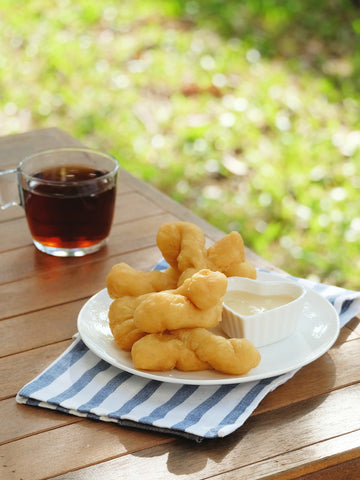
Pairing Food with Tea
Like wine, tea pairs well with food. As you learn to appreciate the characteristics of different teas you can also begin to explore pairing them with food. With each tea in Mighty Leaf’s lineup we try and provide you with recommended food pairings under the sub-menu in the upper left hand corner under the “Use" category. Food pairing is not a science and individuals will have subjective opinions.
The key to food pairing is to break down the flavor profile of a particular tea and match that to complementary food flavors.
For example, pair up a rich Yunnan tea with chocolate or a roasted Hojicha with spicy and nutty foods.
You will find that tea is versatile and any given type can be paired with a variety of foods, ranging from spicy to sweet. If you let your palate be your guide, you will discover the perfect balance of tea and food pairings.Different teas taste best with different kinds of food. As with wine, much depends on personal taste, but the combinations are worth trying.
As a general guideline, try pairing teas with foods from the same geographic region. For example, Japanese green teas taste wonderful with many of the foods indigenous to that country. Here are some examples of teas by region and foods that complement them:
- Japanese green teas: Sencha and other Japanese green teas work well with seafood, fish and rice, or to balance out foods high in sodium.
- Oolong tea: Oolong teas have a light character and often complement shellfish such as lobster and shrimp.
- Black teas: Teas like Organic Breakfast have full body and taste, , and pair great with sweet pastries and desserts.
- Pu-erh teas: Pu-erhs can often be paired with meats and poultry.
- Classic black teas: Teas like Keemun or Yunnan, or Lapsang souchong with hot, spicy foods and work well with meat dishes.
- Jasmine green tea: Works well with delicately flavored cooking.
Cooking with Tea
Just like spices, herbs or fruits, tea is perfect for flavoring beverages, savory foods, baked goods and desserts. Tea is not just the world's second most popular beverage after water, but is a popular ingredient added to foods around the globe.
This is really not such a far-out idea, since people were eating tea a couple of thousand years ago. It's relatively simple to substitute concentrated tea of liquids in many baking recipes. Sweet breads and muffins seem particularly suited to this substitution.
Diana Rose, coauthor of Cooking with Tea, suggests that if you slowly brew tea at room temperature for about twenty to thirty minutes, the resulting infusion will be free of bitterness and astringency and will be even better than quickly brewed tea in various recipes. Of course, you wouldn't want to drink tea brewed like this, as it would be much too strong. She also suggested using spring water instead of distilled water for a superior product.
Brewed tea can also be used in marinades and basting sauces, or as flavoring for stir-fry. Just be sure to choose a flavor of tea that will enhance your meat or poultry.
Next time you are boiling eggs and want to add some thing a little unusual, boil the eggs in black tea, and during the last few minutes of cooking, remove the eggs, crack the shells, and return them to the liquid to continue to cook. This results in beautiful 'marbled' look.
See our Tea Recipes.